Building PCP Referral Pipelines
What you'll learn
- Dismantle the "I'm bothering them" imposter syndrome trigger using clinical data on PCP referral needs.
- Understand the referral leakage crisis: 25-50% of referring physicians never learn whether the patient actually saw the specialist (Milbank Quarterly, 2011) — and fewer than half of patients initiate care when the mental-health provider is off-site rather than in the same office.
- Deploy the 5-sentence clinical email template designed specifically for medical gatekeepers.
- Implement the HIPAA-compliant Zero-Acknowledgment Thank You framework for incoming referrals.
Too busy to read? View the 90-Second Version
PCP referrals account for 39% of client acquisition — the single largest channel. Yet most therapists have zero outreach system.
- Build a target list — Pick 5 targets: 2 PCP clinics, 1 specialist aligned with your niche, and 2 colleague therapists outside your specialty.
- The outreach template — A short, professional email introducing your specialty and availability. Not a sales pitch — a clinical resource offer.
- Follow up once — One follow-up at 2 weeks. After that, your name is in their mental rolodex or it's not.
This channel costs $0, requires no technical skill, and provides high-intent clients who already want therapy. It's the highest-ROI action most therapists have never tried.
You have spent the last two modules building your passive discovery infrastructure — your GBP, your website, your directory profiles. These are assets that work while you sleep. They exist on the internet and attract people who are actively searching.
Now we build your active discovery pipeline. The most-cited channel therapy-seekers say they'd turn to — 39% — is not a website or a directory. It is a human being in a white coat saying your name out loud. And it costs nothing.
The Misconception
If you are like most therapists, the thought of reaching out to a Primary Care Physician triggers an immediate, visceral "salesperson" aversion. You imagine walking into a brightly lit clinic, handing a glossy brochure to a defensive receptionist, and essentially begging for their patients. It feels presumptuous. It feels grifty. Your imposter syndrome tells you that you are not "established enough" to email a doctor, and that you are just going to be an annoying interruption in their already chaotic day.
Let’s look at the actual clinical data.
Remember the numbers from Module 1: 39% of therapy-seekers say they'd turn to a PCP or professional referral — the most-cited channel they'd use. Google Search sits at 28%, behind referrals, word of mouth, and insurance portals. (Those are what people say they'd use, and they overlap — but the human channels lead in every version of the data.) And the access gap behind that referral has only widened: as of late 2025, only about 27% of the country's mental health need was being met, with roughly 137 million Americans living in designated mental-health shortage areas (HRSA).
You are spending time and money competing for the 28% who search Google, while the 39% sitting in doctors’ offices goes completely unaddressed. Not because you are lazy. Because it was never presented to you as an option, and when you imagined it, imposter syndrome told you to sit back down.
PCPs are diagnosing depression and anxiety all day long, handing patients a generic printed list of names, and watching those patients fall through the cracks because the friction is too high. When you email a PCP, you are not a salesperson. You are administrative relief. You are answering a distress call they have been making for years.
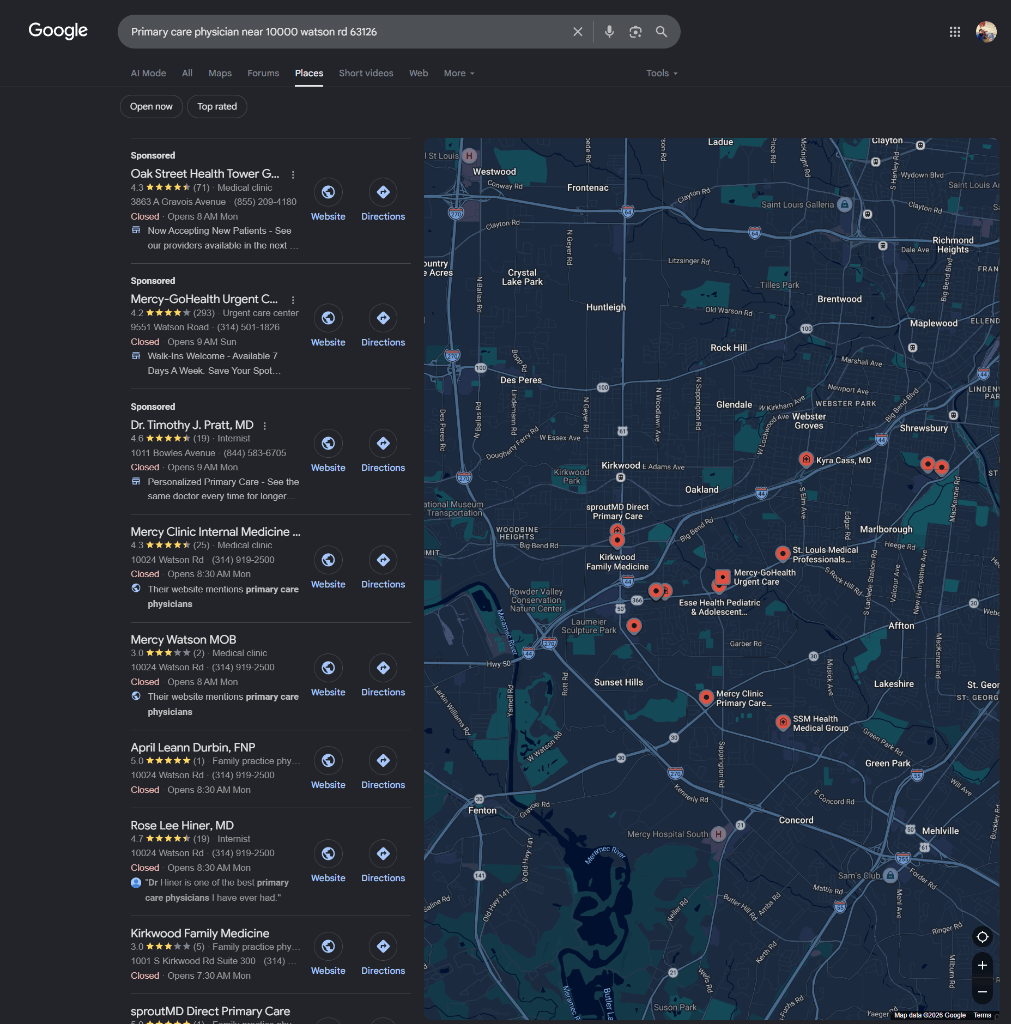
Proximity matters. PCPs refer to therapists they can visualize as 'nearby' to their patients. Start with clinics within a 5-mile radius of your office or the zip code you serve.
Why It Feels So Hard (And Why That Feeling Is Lying to You)
The Somatic Trust Bridge
Why do PCP referrals convert at such an astronomically high rate compared to directory profiles? Because of the somatic trust bridge.
| Advantage | What It Means for You |
|---|---|
| Trust transfer | 88% of people trust recommendations from people they know — more than any other channel (Nielsen, 2021). A doctor's referral carries that weight. |
| Pre-qualification | Referral sources send people who match your specialty — better fit, longer retention, better outcomes. |
| Compounding | Unlike ads that stop when you stop paying, each referral strengthens the relationship for years. |
| Conversion rate | Industry consensus: warm referrals convert several times better than cold inquiries. |
When a patient is searching on a directory, their nervous system is heightened. They are experiencing clinical aversion — fear of choosing the wrong therapist, fear of being misunderstood, fear of wasting money. But when their trusted family doctor says, “I know a therapist who works exactly with what you are experiencing,” that trust transfers instantly. The patient’s decision fatigue is bypassed.
You don’t need to bake cookies. You don’t need an elevator pitch. You just need to build that bridge. The entire process takes 12 minutes per referral source and can be done entirely from your desk, in your pajamas, between sessions.
The 12-Minute Outreach Protocol
This protocol is designed specifically for introverts. It requires zero in-person schmoozing, zero blazers, and zero cold calls. It is a purely administrative, asynchronous process.
The 5-Sentence Clinical Email
Medical professionals do not read; they scan. Your email must be stripped of all marketing jargon and read like a peer-to-peer clinical note.
Subject: Referral resource — [Your Specialty] in [Your City]
Hi [Name or Clinic Manager],
I am [Your Name], a [Credential] in [City]. I specialize in [Specific Niche — e.g., late-diagnosed adult ADHD; do not just say “anxiety and depression”].
I know you regularly see patients navigating [Their Population/Context], and I wanted to introduce myself as a direct referral option for when you encounter someone who needs [What You Do].
The easiest way for patients to connect is [Your Booking Link or Email]. There is no paperwork required from your end; I will handle the intake directly.
I am always happy to consult briefly if you have a complex case, but no pressure at all. I just wanted to ensure you had my availability on file.
[Your Name, Credential, NPI, Website]
The Zero-Acknowledgment Thank You
When a referral inevitably arrives, you must say thank you without violating HIPAA. You cannot confirm or deny that the patient contacted you unless you have a signed Release of Information (ROI).
The HIPAA-Safe Reply: “Thank you for the recent referral. I always appreciate when you send folks my way.”
This reinforces the behavior without confirming PHI. It is behavioral reinforcement — you use it with clients every day.
Total time per referral source: about 12 minutes. Five sources = one hour of your life. That is less time than it takes to write a single Psychology Today profile — and the ROI potential is dramatically higher.
Key takeaways
- PCPs are desperate for you: in a landmark study, two-thirds of PCPs couldn't get outpatient mental-health care for their patients (Health Affairs, 2009), and the shortage has only grown since — only ~27% of national mental-health need is met (HRSA, 2025). You are solving their bottleneck, not asking for a favor.
- Referral leakage is your opportunity: 25-50% of referring physicians never learn whether the patient actually saw the specialist (Milbank Quarterly, 2011), and fewer than half of patients initiate off-site mental-health care versus about 80% when the provider is in the same office (Translational Behavioral Medicine, 2012). A direct relationship with you removes that friction.
- Keep it clinical: Doctors want specialties and availability, not glossy brochures and cookies. The 5-sentence email template is deliberately stripped of marketing language.
- Say thank you ethically: Reinforce the referral behavior using the HIPAA zero-acknowledgment framework. Never confirm or deny that a specific patient contacted you.